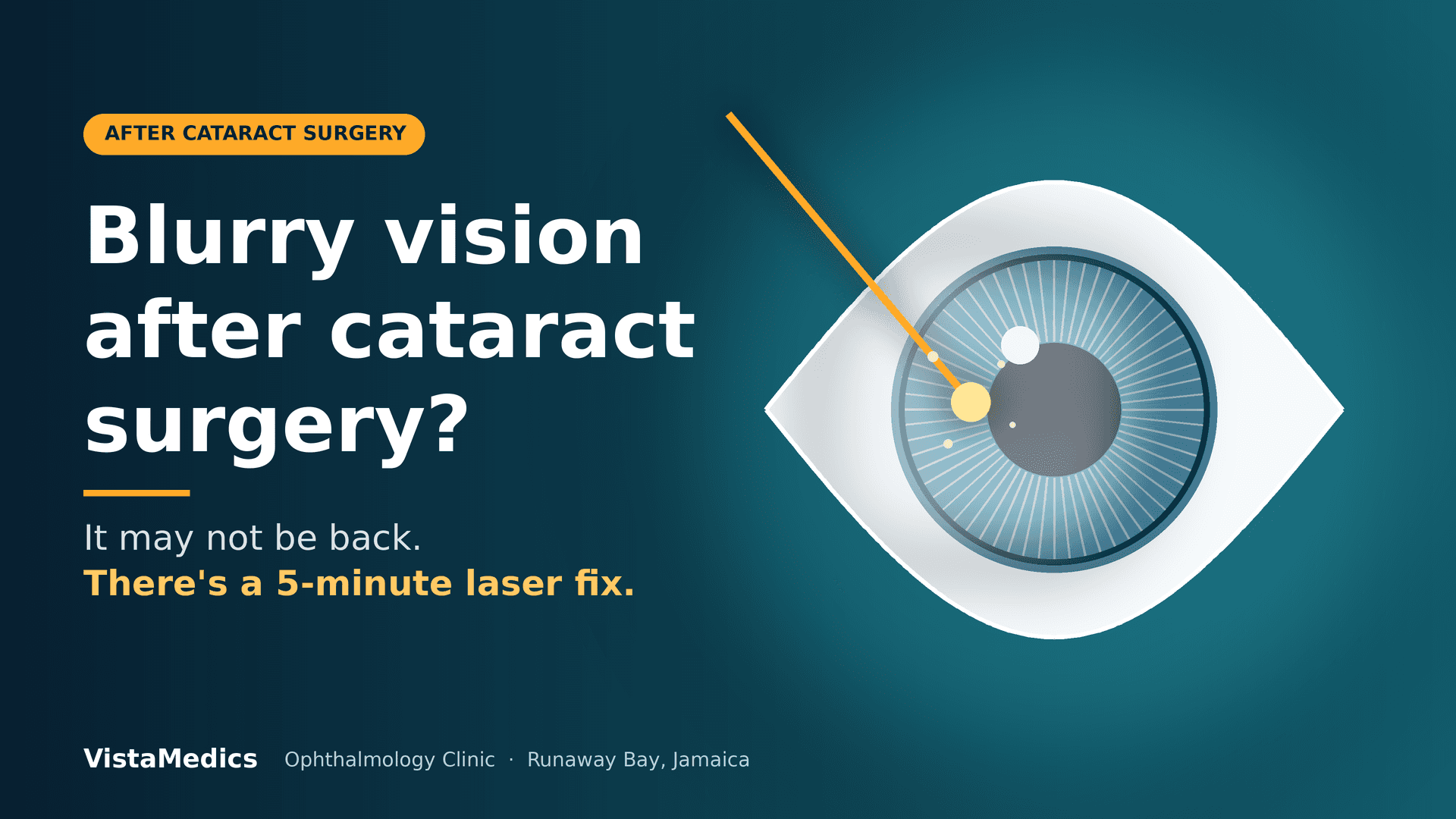
You had cataract surgery months ago. Colors looked brighter, reading became easier, and the world finally looked sharp again. But now your vision seems blurry once more.
The reassuring answer: Once the natural lens has been removed, the original cataract cannot grow back. Posterior capsule opacification can make vision cloudy again, but it is not a true cataract and may be treated with a quick YAG laser procedure.
The laser portion typically takes around five minutes, although the complete appointment takes longer.
Why Is My Vision Blurry Again Months After Cataract Surgery?
Blur shortly after surgery can be part of healing. When eyesight was clear for months and then becomes cloudy again, PCO is one possibility, but dry eye, a prescription change, or a retinal problem can also affect vision.
Can cataracts actually come back?
No. Surgery replaces the natural lens with a clear artificial lens. The capsule holding it can become hazy over time, which explains why symptoms may feel familiar even though the original cataract has not returned.
What is PCO?
Remaining lens cells can grow across the capsule behind the implant, scattering light and causing blur, glare, halos, and reduced contrast.
Signs Your Cloudy Vision May Be Caused by PCO
Gradually worsening vision can be consistent with PCO, but symptoms alone cannot establish a diagnosis.
When blurry vision could mean something else
Fluctuating blur may point to dry eye. Distorted central vision may involve the macula. Sudden flashes, many floaters, or a curtain-like shadow can signal retinal detachment.
- Sudden vision loss
- A dark curtain or shadow
- New flashes with many floaters
- Severe eye pain
- Painful redness
- Sudden visual distortion
A clearer next step
Blurry vision deserves an eye examination—not a guess
A professional evaluation can identify whether PCO, dry eye, a prescription change, or another condition is affecting your sight.
Book Your ConsultationThe 5-Minute Fix: How YAG Laser Capsulotomy Works
When PCO is confirmed, your ophthalmologist may recommend YAG laser capsulotomy. It creates a small opening in the cloudy membrane behind the artificial lens without another incision or lens removal.
Examination
Your ophthalmologist confirms whether PCO is causing the change in vision.
Preparation
Dilating and numbing drops prepare the eye.
Laser treatment
Brief pulses create an opening in the cloudy membrane.
Aftercare
Your eye pressure may be checked and drops may be prescribed.
How quickly will vision improve?
Many patients notice improvement within hours to a few days when PCO is the main cause. Results vary with other eye conditions and retinal health.
Is YAG Laser Capsulotomy Safe?
YAG capsulotomy is widely used because it is quick and does not require an incision. Temporary floaters, blurred vision, inflammation, or a short-term rise in eye pressure can occur. Less common complications include macular edema, retinal tears, or retinal detachment.
When should you contact your eye doctor?
Arrange an examination if vision becomes blurry again, even when the change is gradual and painless. Report severe pain, sudden vision loss, a dark shadow, or numerous new floaters and flashes urgently.
Other Causes of Blurry Vision After Cataract Surgery
PCO is important, but it is not the only explanation. A complete examination distinguishes problems affecting the eye surface, implant, or retina.
| Possible cause | Typical clues | Potential management |
|---|---|---|
| Posterior capsule opacification | Cloudy vision, glare, halos | YAG laser |
| Dry eye | Fluctuating blur, burning | Lubricating drops |
| Residual prescription | Blur at certain distances | Updated glasses |
| Retinal problems | Flashes, floaters, distortion | Urgent evaluation |
Frequently Asked Questions
Can PCO go away on its own?
It generally does not disappear once the membrane is cloudy. Mild cases may be monitored; vision-limiting PCO may be treated with YAG laser capsulotomy.
Can blur return after YAG treatment?
Yes. Dry eye, prescription changes, retinal disease, or another condition may be responsible.
Is YAG laser capsulotomy painful?
It is generally painless or minimally uncomfortable. Bright flashes or mild pressure may occur.
Can you drive afterward?
Dilating drops may blur vision for several hours, so arrange transportation and follow your doctor's advice.
Protect your vision
Get the right explanation for your changing vision
A professional evaluation can identify whether PCO, dry eye, a prescription change, or another condition is affecting your sight.
Book Your Consultation